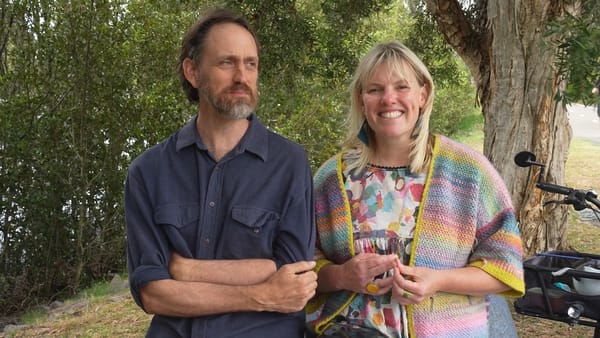
Aboriginal Learning: Water Stories
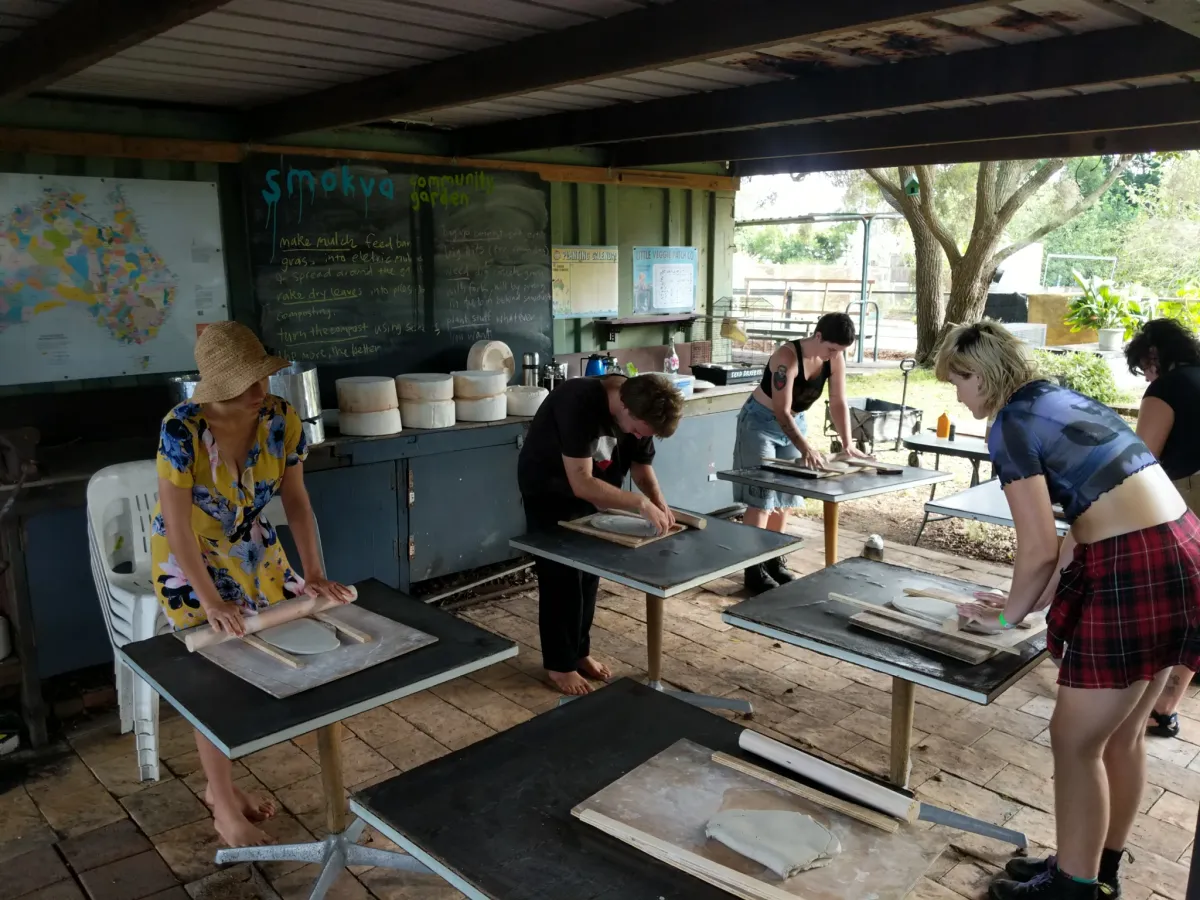
With support from Hunter Water's Love Water grants I ran a series of workshops which were intended to increase our local community garden's drought resilience while sharing broader knowledge about water in landscapes amongst the community. We followed the 8 Ways Indigenous Aboriginal pedagogy.
This Aboriginal pedagogy framework is expressed as eight interconnected pedagogies involving narrative-driven learning, visualised learning processes, hands-on/reflective techniques, use of symbols/metaphors, land-based learning, indirect/synergistic logic, modelled/scaffolded genre mastery, and connectedness to community. But these can change in different settings. 8ways.online
The workshops were designed as a time for us to come together and share stories about our experiences of water in a time when our environment is changing faster than ever. We take time to reflect on the significance of water in our lives and take a brave look into extreme events of our past and potentials for out future while crafting something with our hands.
Hand Made Clay Ollas
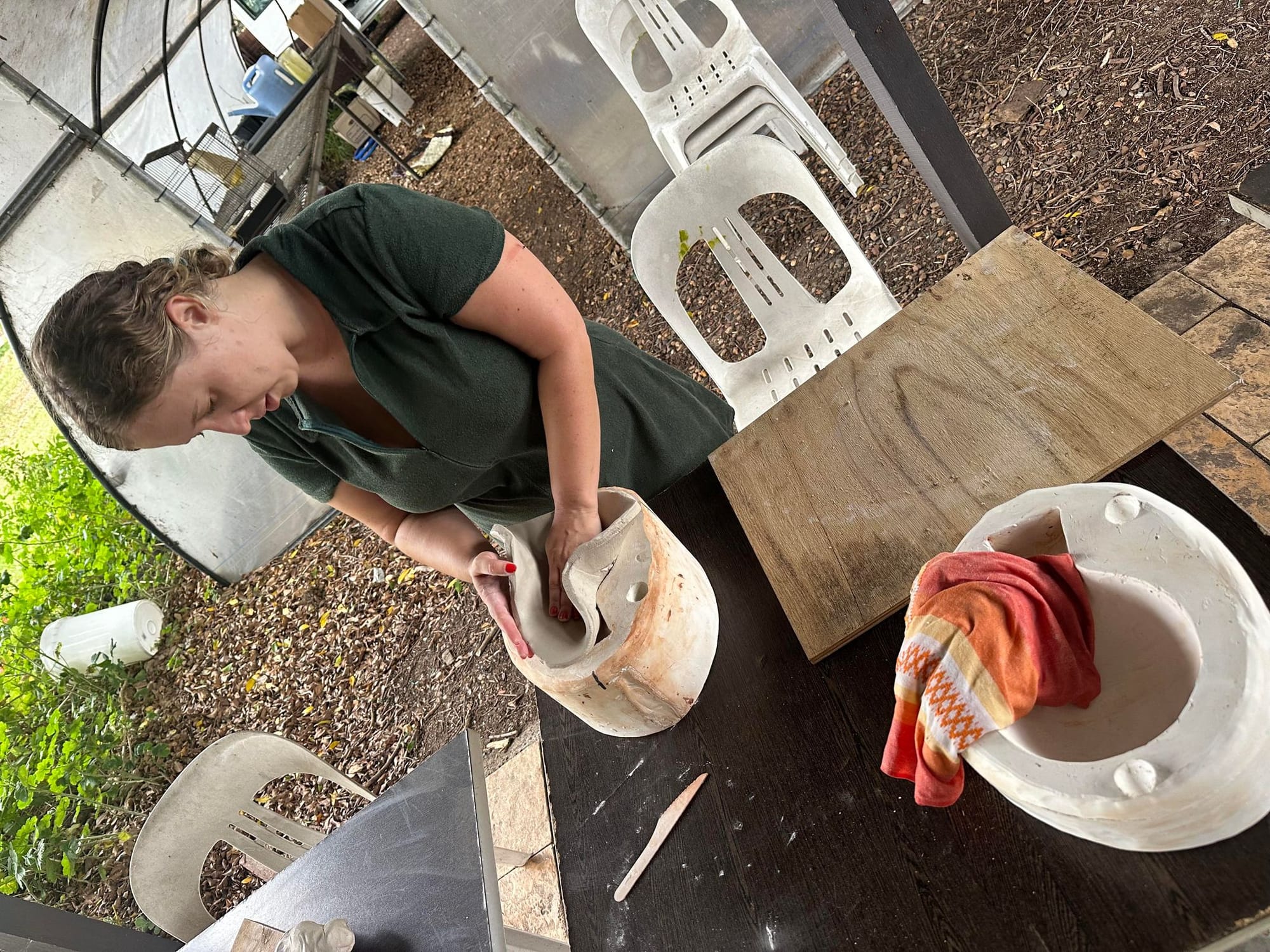
Participants are invited to make their own olla, an ancient and extremely efficient irrigation technique which becomes a vessel for delivering moisture to the soil as it is needed, but also a vessel for their memories and experience. They can take these home or donate them to the community garden as part of our ongoing irrigation effort.

Conservation Culture
Beyond shortening our showers, we share daily rituals and strategies that strengthen our appreciation for water and our commitment to pushing system changes. We look at the regional map and discus the natural catchments and built infrastructure that lead water into our mysterious taps.
Design Patterns
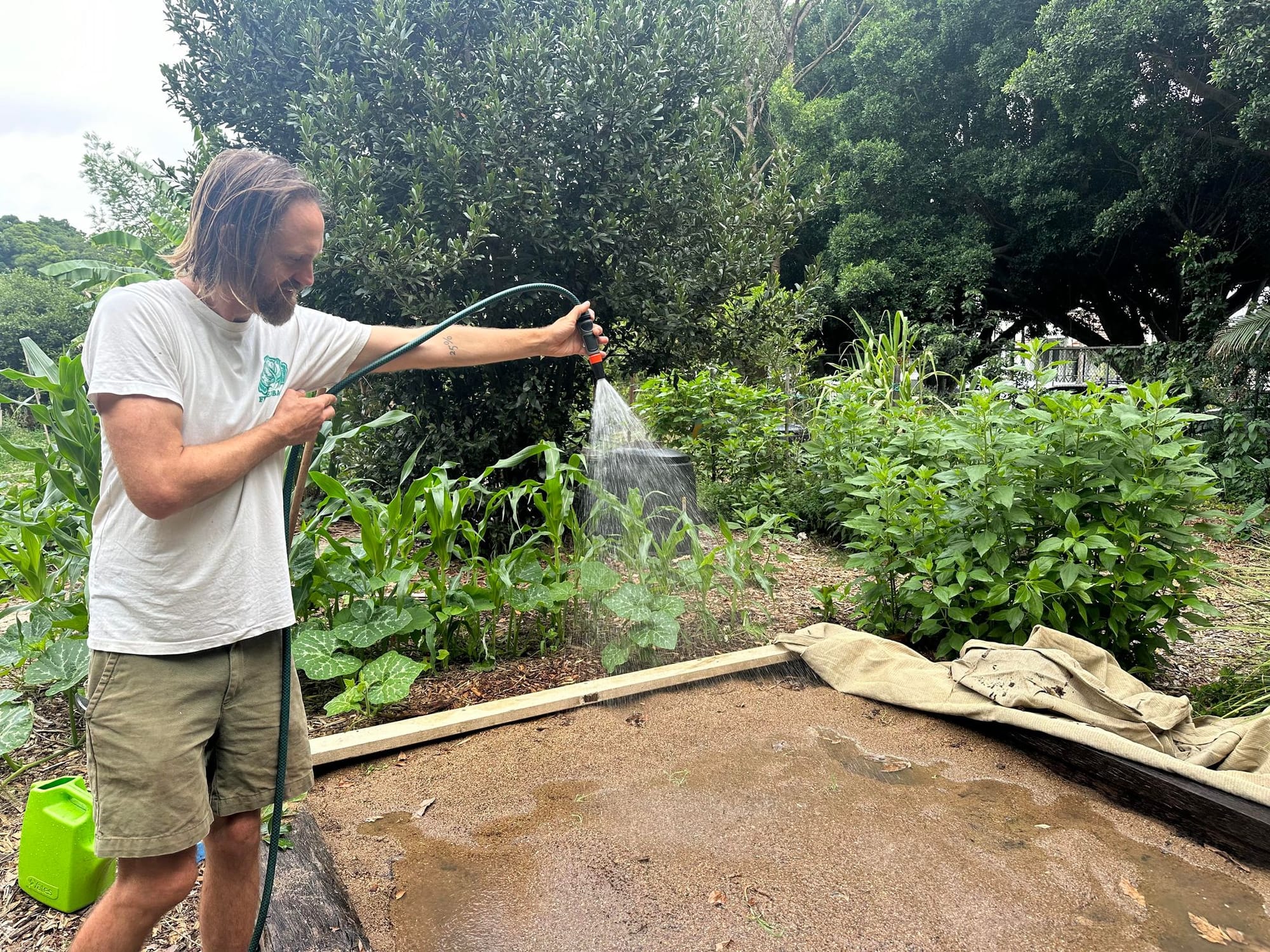
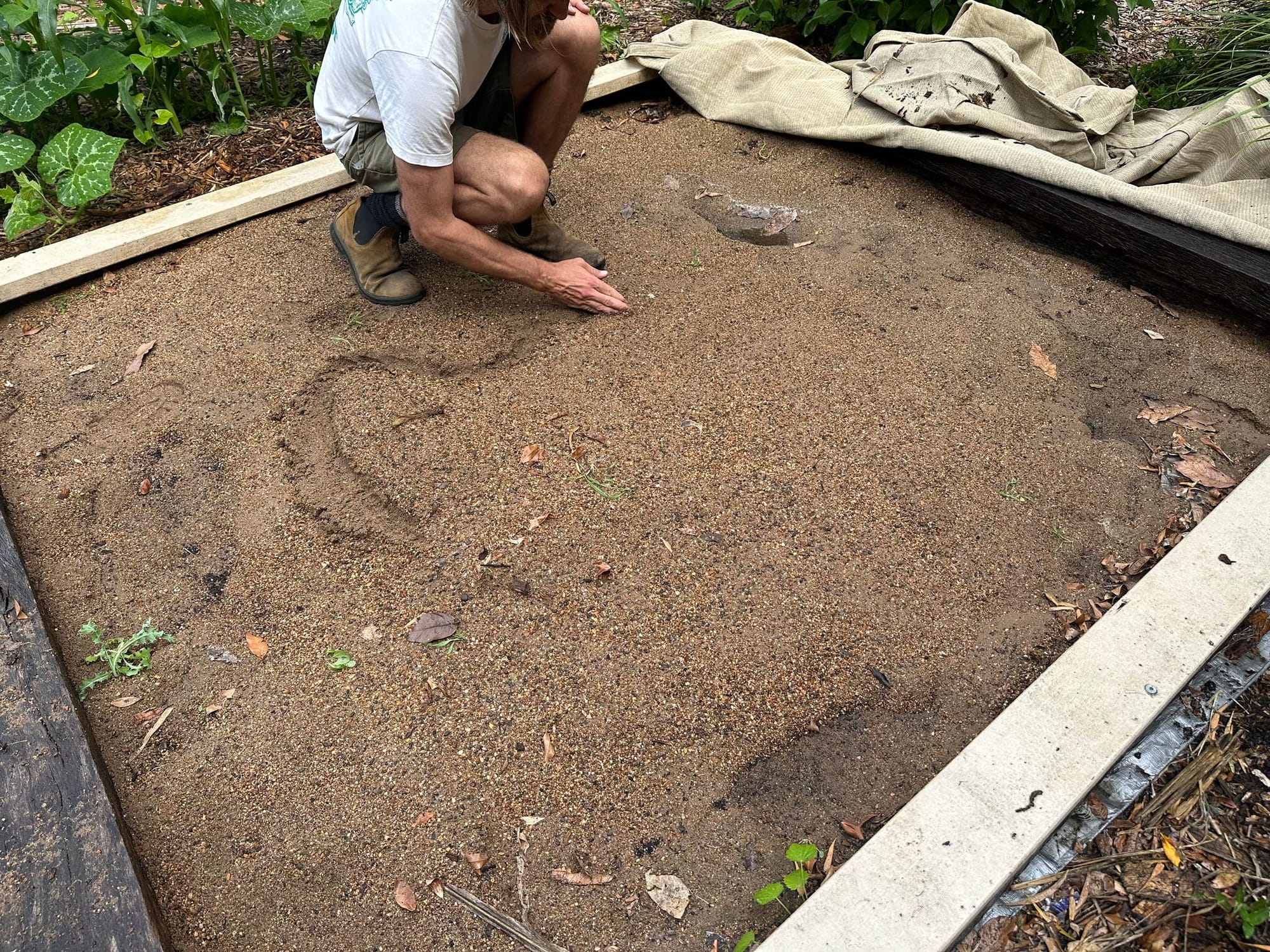
We share established solutions for making the most of the water that flows through our lives. We get into the sandpit, sculpt out a model landscape and experiment with how water flows and merges in its rush to get back to the sea- and play with how it can be manipulated for the benefit of plants, animals and ourselves.
Workshop Outline & Notes
I’d like to begin by acknowledging the Traditional Owners of the land on which we meet today, the Awabakal people. I would also like to pay my respects to Elders past and present. This workshop is guided by the 8 ways of Aboriginal learning.
There are a bunch of facts on this page, but I'm putting it together to help my understanding of water in our lives.
The workshops will be quite different depending on who turns up and what knowledge and interest they bring. We won't be sharing fact sheets and figures but we will be getting busy with our hands, with our community, in the garden where the magic happens.
Introductions and Stories
Share your name, something about yourself and, if you like, a story that relates to water- magical, scary or an epiphany that you have had. About 5 min. [40 min total]
I remember in the early days of moving to a hobby farm when I was 16. We had some friends around and together with my sisters we had a huge water-fight. It started with overturned tables as forts, lobbing balloons at each other in the heat. Then it devolved into filling buckets of water to sneak up and dump on each other's heads and dowsing each other with the hose... on jet mode... point blank. All the fun came to an abrupt end when water suddenly stopped coming out of the tap. This was my introduction to the realities of living on tank water.
Our Water (Hunter District)
Our drinking water comes from Chichester dam and Grahamstown Dam, Chichester is located at the top of the Williams River catchment (it contributes around 35 per cent of the Lower Hunter’s potable water supply). Grahamstown Dam is the Hunter’s largest drinking water supply dam, providing 40 per cent of water to our region and meeting up to 75 per cent of our daily supply requirements.
In 1981 our reserves got down to 30%. In 2020 It got as low as 53%. Do you remember 2020, the restrictions, the fires?
All of our water supply is 100% drinking water. We only drink 1%.
Reflecting on Challenges
Do you remember 2020, the restrictions, the fires? What were people doing? What did it feel like? [5 min]
Other Stories I Remember
- Wilcania getting water delivered by truck
- IPCC warning about making use of waste resources in the future
- The unnecessarily complicated economics of not weeing in the toilet
- Binalong & nitrates in the water
- PFAS in Williamtown
Water efficiency in the garden
[30 min]
- Mulching: demo of how we grow bana grass and mulch it on site. Feel soil under mulched garden vs non-mulched! Mulched soil is moist and sticks to your finger.
- Compost, how it retains water in the soil, right where it falls and where it's needed
- How triggers save water
- Harvesting
- How raised beds have good drainage, get hot and dry out
- Irrigation
- More effective versions:
- Drippers
- Wicking beds (demo)
- Large droplets (demo)
- Long and infrequent watering
- Ollas
- More effective versions:
- Less effective
- Soaker hoses (perishable)
- Misters / sprayers (evaporate)
- Landscaping (Swales demo in sandpit)
Olla making
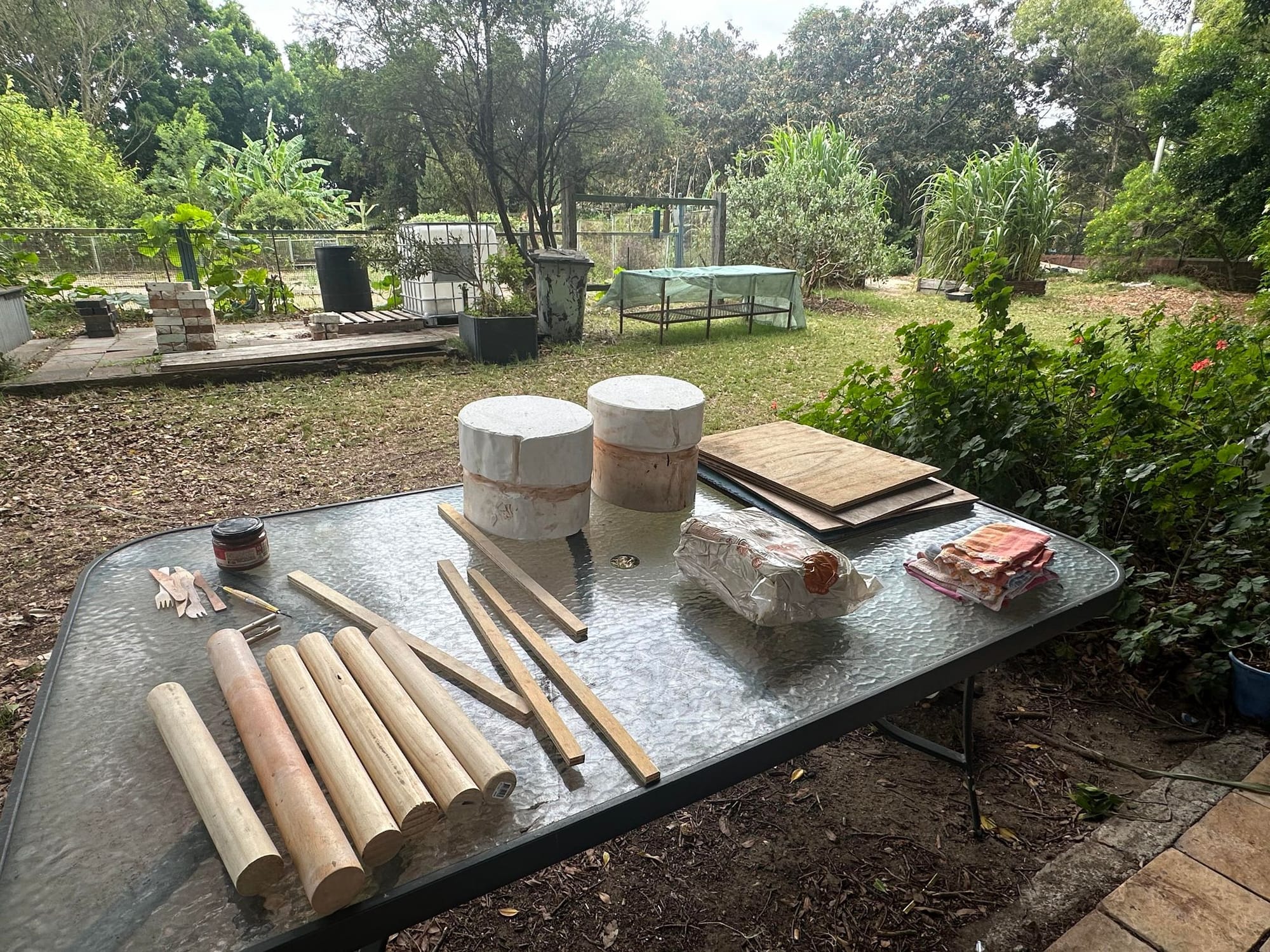
Things to bring
- Wobble tee
- Ollas
- Demo olla
- Clay (1 bag = 4 ollas)
- slab sticks (8 sets)
- boards x (4-5 more)
- tea towels for keeping clay moist (4 more)
- scraps bucket
- slurry (jars x 8)
- knifes (wood) & forks x 8
- rolling pins x 8 (2 more)
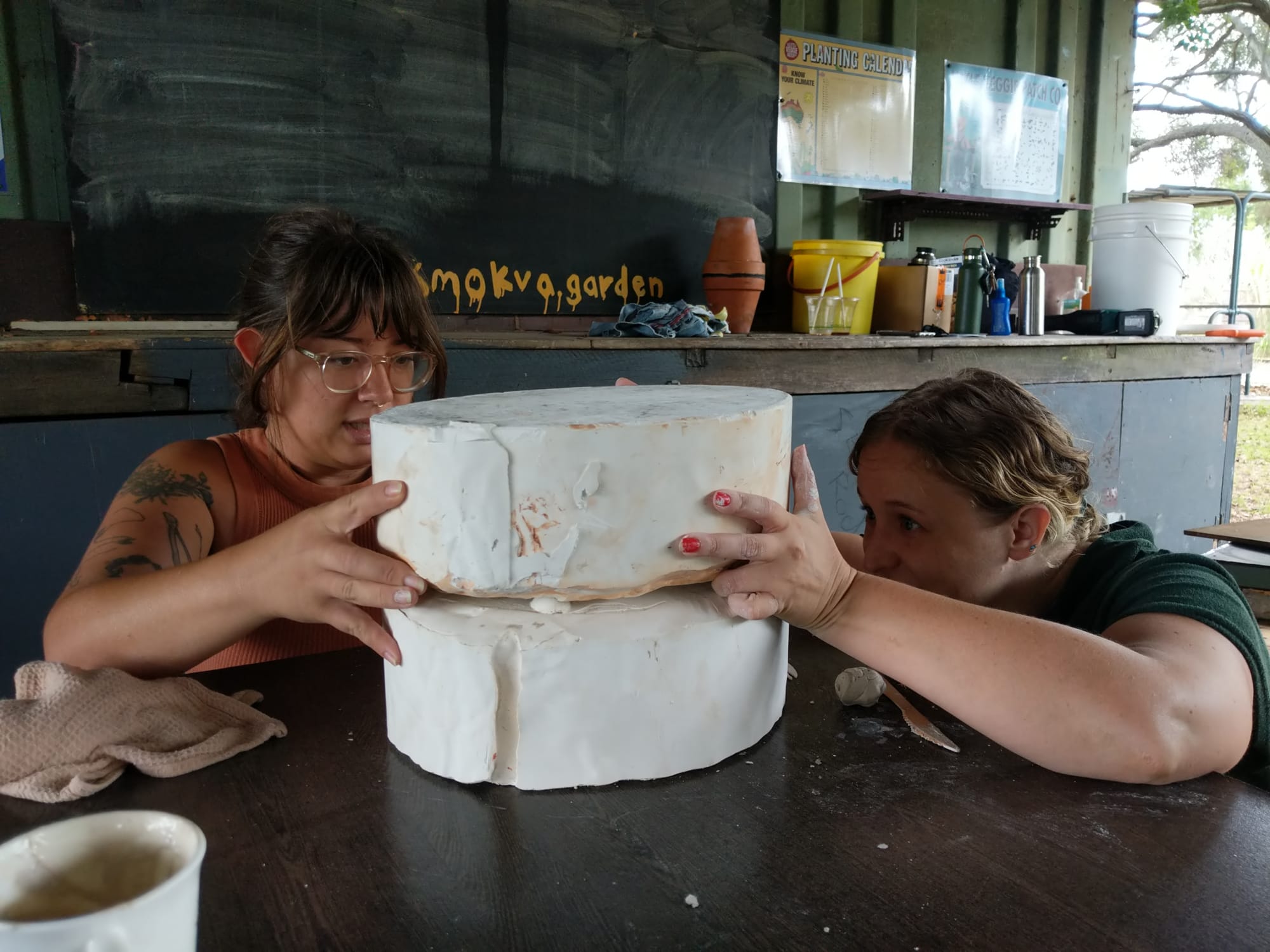
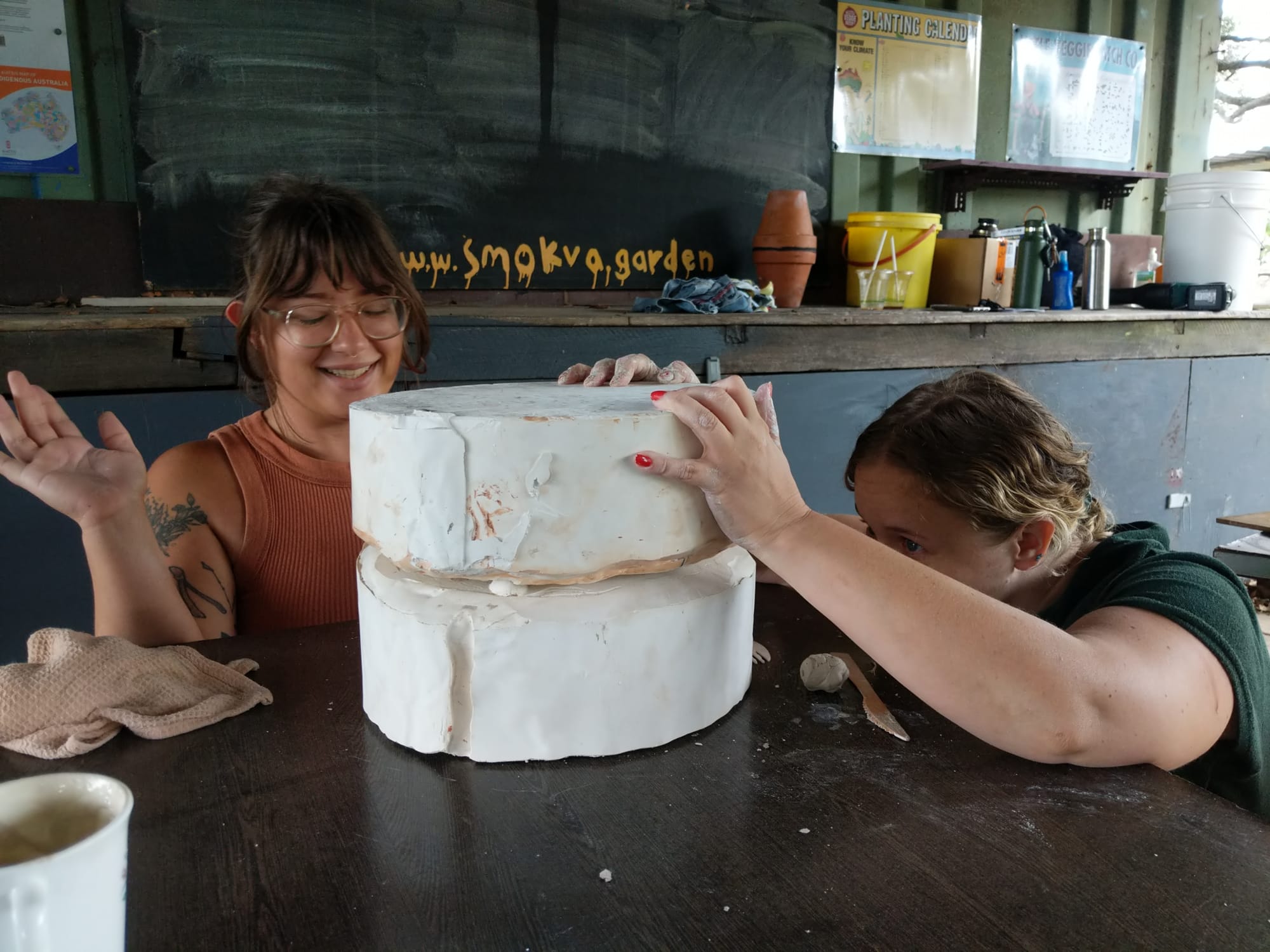
- molds x 8 (4 more)
- rags
- string
- Rake
- Secateurs (for tiny trees in swales)
- bug spray
- herbal teas (lemon myrtle, mint)
- snacks
- bowls to stand finished ollas in
- vinegar for cleaning moulds
- spray bottle for clay
What participants should bring
- wear old clothes or apron
- water bottles
Preparation
- Rake and pre-wet sandpit
Plaster Mold Making
This is the process I used to make the moulds (which speeds up the process of making ollas).