Moon F#%!: New Adventures On Old Hardware
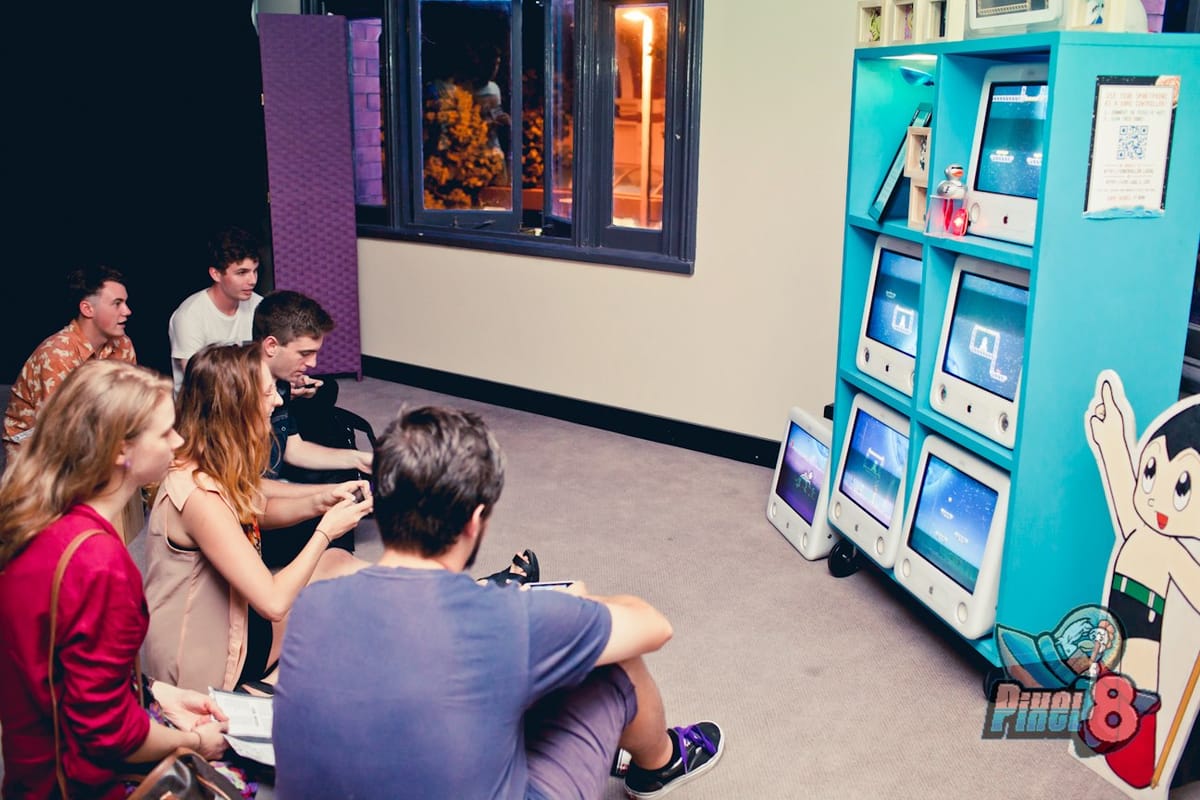
Moon Fun is a videogame art installation made in collaboration with Chris Wnuk.
Inspired by the frequent sight of old televisions on the side of the road, this project aimed to make a new experience out of waste technology.
The game is inherently cooperative in nature. Though one player can easily be enticed to play alone, they will quickly learn that in this game you need the help of friends. With the help of a friend- you can score your planet bound explorer- a jet pack, which opens up access to the sky.
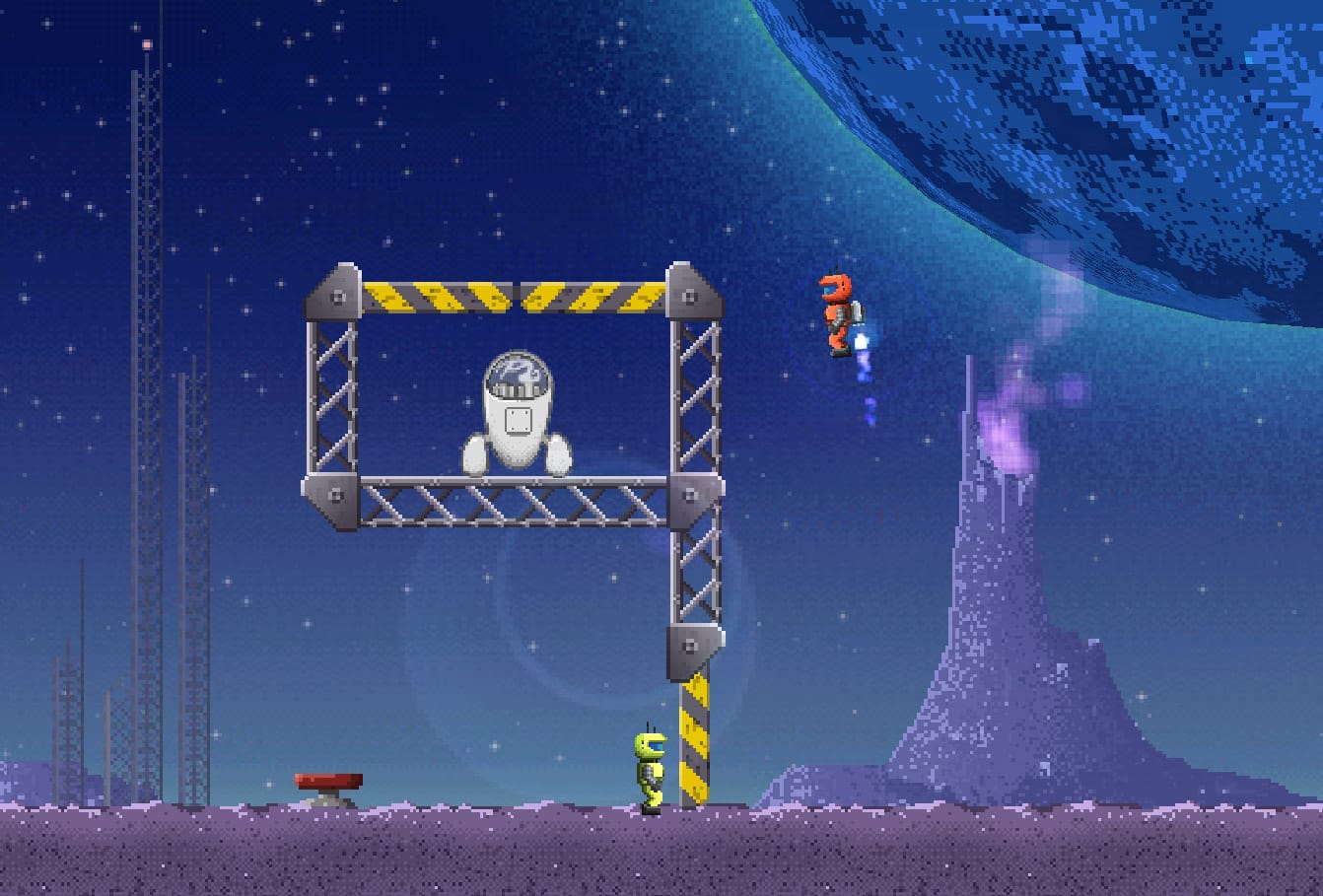
It's a whole lot of fun flying around space by pulsing your jetpack and occasionally slamming into walls or friends, but the real fun and frustration begins when you realise that there are some places that can only be reached by a two-pilot space ship. One player can fire one blaster, and the second player fires the other. The rest is up to communication and physics.
The space ships, should you ever figure out how to control them, need to collaborate to get through to the "victory tube" and so... the pixelated ponzi scheme grows.
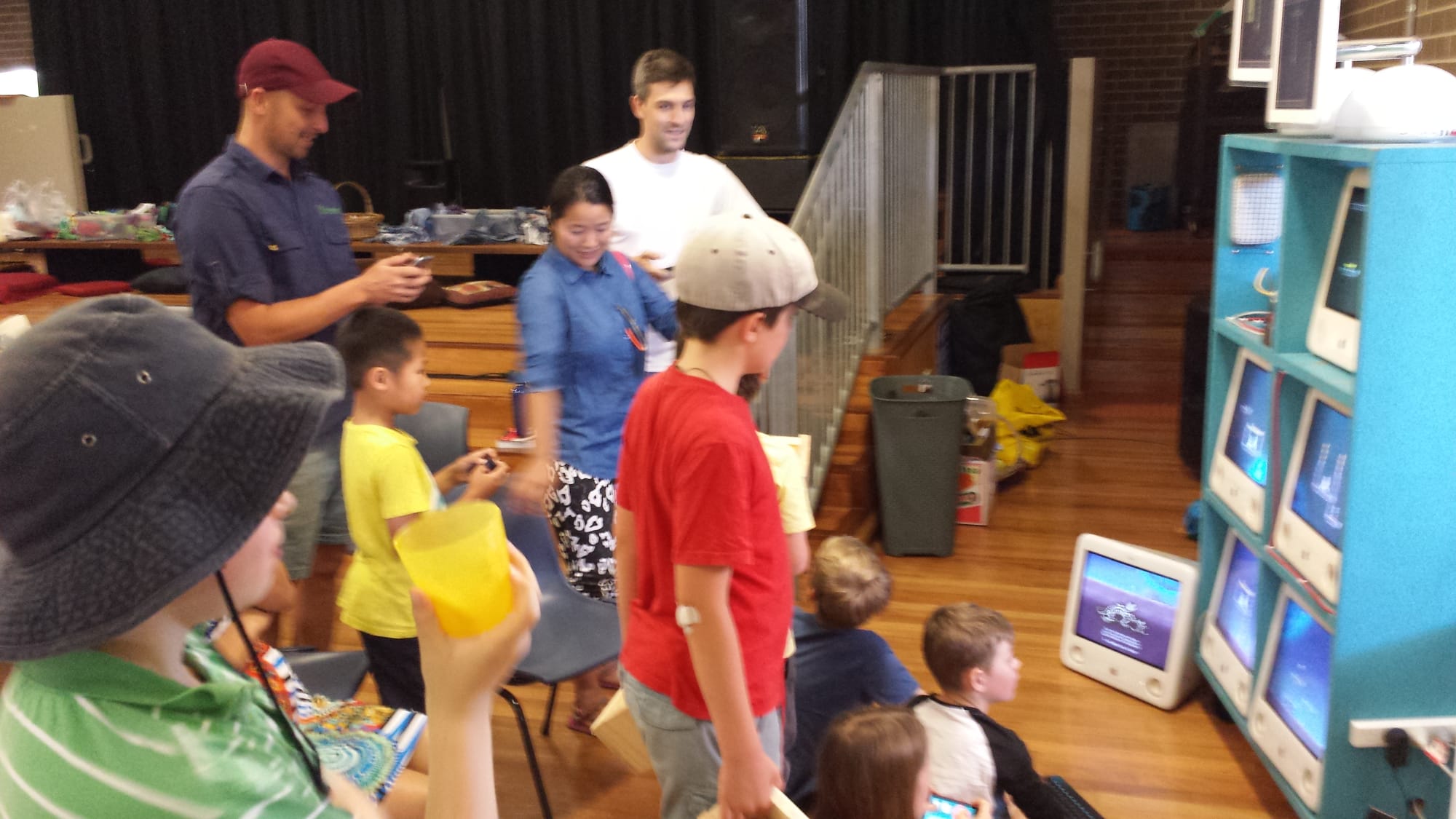
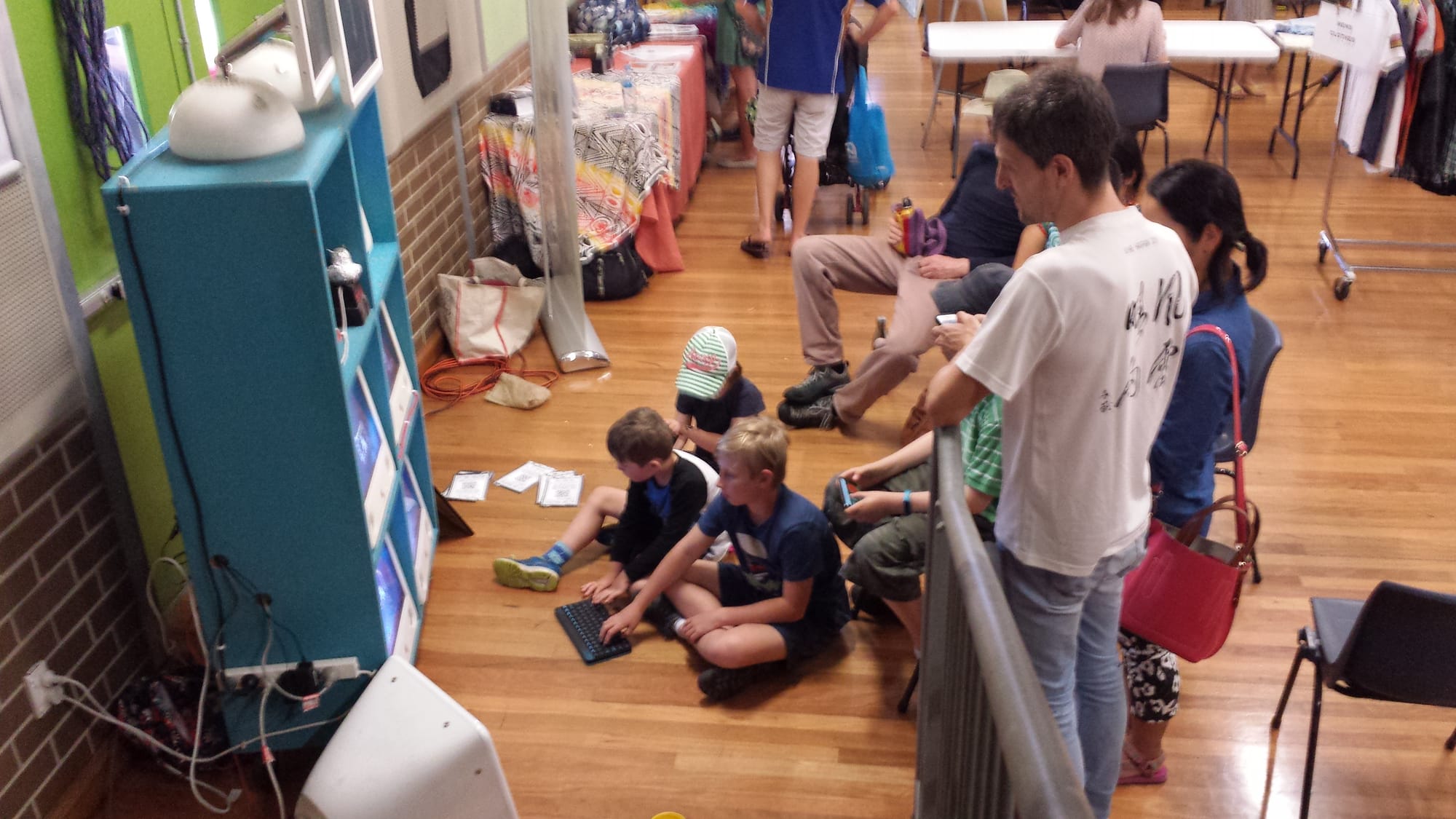
Fair Share Festival, Newcastle 2017
Players use their smartphones to control their characters and their eyes are all affixed to the 8 eMacs and iMacs which show the whole platform-world simultaneously. As such there is no limit to how many people can join (I've seen 20). As space people walk, fly and crash dive between the screens, they disappear for critical seconds as they blindly traverse the negative space between screens. An out of control, single, space person can easily crash into and destroy a very in-control, mission focused space ship. Though non-violent in spirit, these emergent details make the seemingly simple game, incredibly hard and yet addictive.

It has been a pleasure to watch all sorts of people play, especially the ones who "don't do videogames".
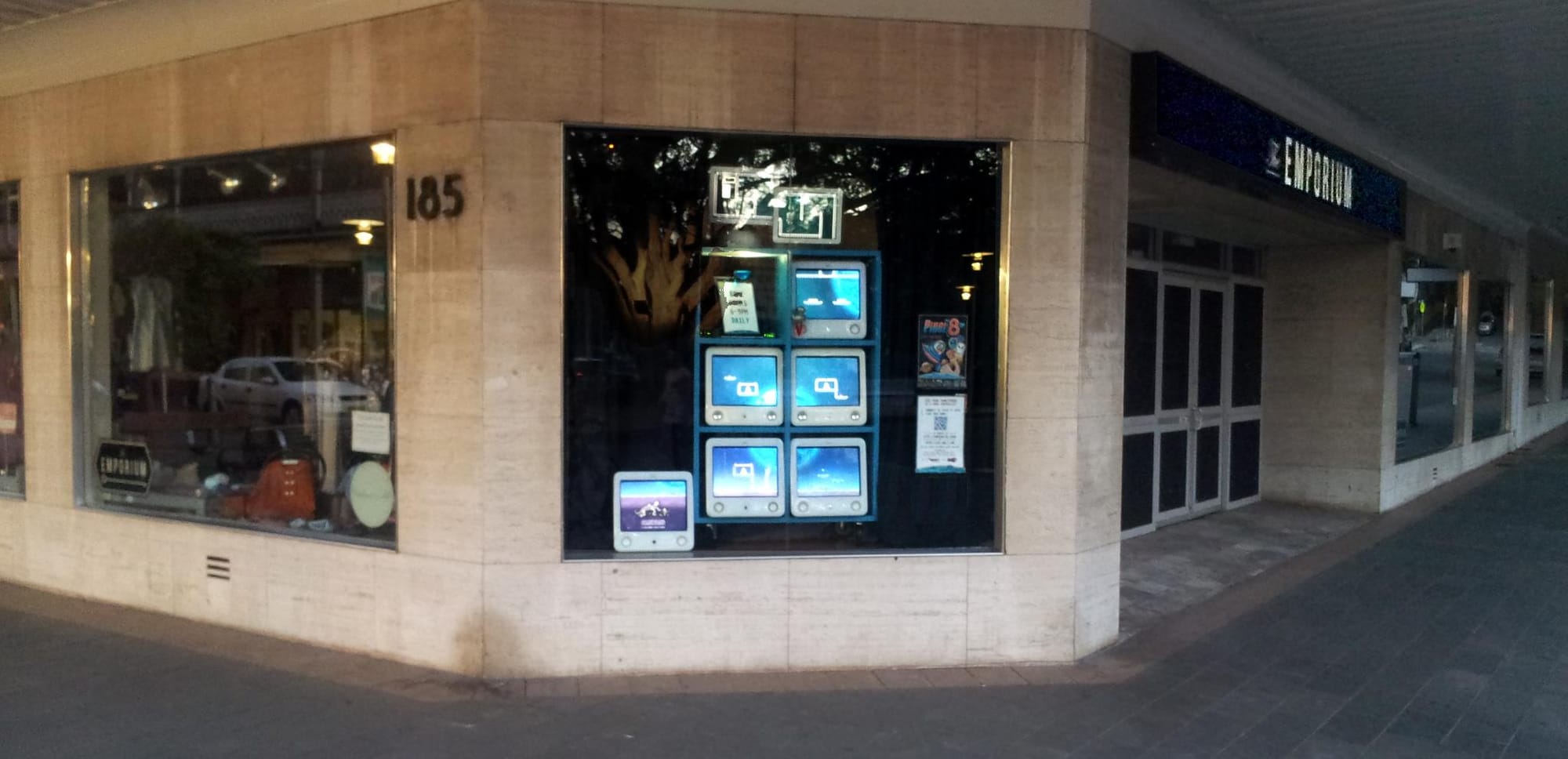
Every time we've set up the game in progressive years, the eMacs and iMacs show their age. At first it was just the onboard clock batteries that needed to be replaced. After time there started to be power board failures. Though it was possible to replace capacitors on the power boards, there were about 20 per machine and as soon as I replaced one set another would go. Sure they might have gotten another 10 years of usage if I had replaced them all, but that was 100s of capacitors and I think I was already pushing the patience of my housemates with all these old computers hanging around. They have now been given away for parts.

It's worth noting at this point that it is common practice for hardware designers to place capacitors near a heat sink on a circuit board which significantly reduces the life of the capacitor. This is planned obsolescence. But these computers were put in a dumpster long before they actually stopped working. In the case of apple computers, as Apple benefits from hardware sale not software, it is in their best business interest to constantly release new hardware rather than refining the software for old models. I don't mean to say Apple is worse than other popular alternatives. They're all mostly terrible and we always need to think about where all this shit comes from and where it ends up.